
Walking into a clinical environment to have your mouth examined is a profoundly vulnerable experience. The mouth is a highly sensitive, intimate part of the body, and for millions of people, sitting in that chair triggers a very real, physiological anxiety response. It is completely normal to feel overwhelmed, not only by the fear of physical discomfort but also by the sheer volume of treatment options, complex clinical terminology, and potentially high financial costs. When you are handed a treatment plan with a list of procedures you barely understand, it is easy to become paralyzed by indecision and simply delay the work altogether.
However, ignoring oral health issues does not make them disappear; it only allows them to compound into far more painful and expensive emergencies down the road. The mouth is not an isolated system. It is the primary gateway to the rest of your body. A growing body of scientific literature inextricably links chronic oral infections to severe systemic conditions, including cardiovascular disease, poor glycemic control in diabetics, respiratory infections, and even adverse pregnancy outcomes. Your oral health is a direct reflection of your overall physiological wellness.
Navigating your treatment options requires shifting your perspective. Instead of viewing procedures as a random menu of choices, you must understand the clinical hierarchy of needs. Just like building a house, you cannot put on the roof before you pour the foundation. The progression of oral wellness follows a strict, logical path: thorough diagnostics, establishing a disease-free foundation, rebuilding structural integrity, correcting functional alignment, and finally, perfecting the aesthetics. This comprehensive guide will walk you through each phase of this journey in depth, empowering you to make educated, confident decisions about your health and your smile.

Assess Your Baseline Health and Set Clear Goals
Before any physical work begins, you must establish an accurate baseline of your current health status. Guesswork has no place in medicine, and assuming you know what is wrong based on a quick glance in the mirror can lead to catastrophic treatment failures. The first step in your journey is conducting a thorough self-audit of your daily habits and symptoms.
Take a few days to actively monitor how your mouth feels and functions.
- Do your gums bleed when you brush or floss?
- Do you experience sharp, fleeting pain when drinking ice water or hot coffee?
- Is there a dull, throbbing ache that keeps you awake at night?
- Do you wake up with tension headaches or a sore jaw, indicating you might be grinding your teeth in your sleep?
Documenting these specific symptoms provides crucial diagnostic clues for your healthcare provider. Once you have a clear picture of your daily symptoms, you need to undergo a comprehensive clinical examination. You want to establish a relationship with a modern, well-equipped dental clinic where the staff prioritizes diagnostic accuracy over rushing patients through the chair. A proper baseline exam is far more extensive than merely looking for cavities with a mirror and a probe.
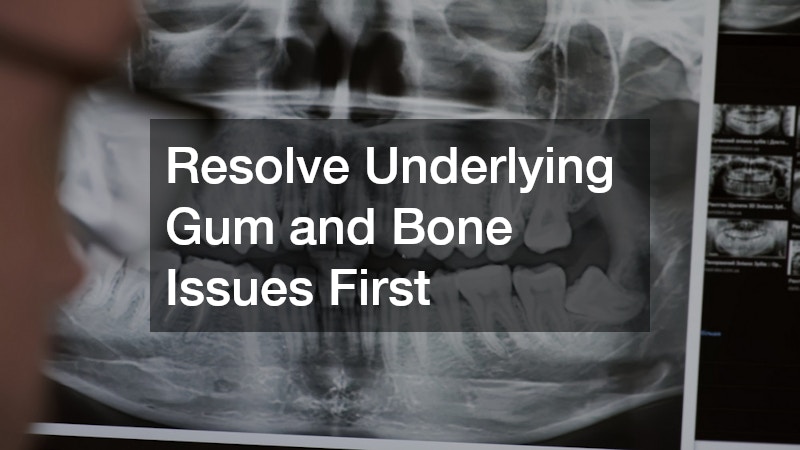
A comprehensive evaluation should include a full series of intraoral x-rays, and ideally, a panoramic x-ray or a 3D Cone Beam Computed Tomography (CBCT) scan. These imaging technologies allow the practitioner to see exactly what is happening beneath the gum line, identifying hidden decay between the teeth, silent abscesses at the root tips, and the density of your jawbone. Furthermore, the exam must include a thorough oral cancer screening, where the practitioner palpates the lymph nodes in your neck and examines the lateral borders of your tongue and the floor of your mouth for suspicious lesions.
Effective communication during this phase is paramount to your long-term success. You must be an active participant in your dental care rather than a passive recipient. Bring your list of symptoms and do not hesitate to ask highly specific questions about the proposed treatment plan. Ask to see your X-rays and have the provider point out the areas of concern. Request a detailed explanation of the risks, benefits, and alternatives for every procedure recommended. A trustworthy practitioner will welcome these questions and take the time to ensure you fully comprehend the roadmap ahead before any instruments are picked up.
Resolve Underlying Gum and Bone Issues First
In the architectural hierarchy of the mouth, your gums and your jawbone act as the foundation. You can have the most beautiful, structurally perfect teeth in the world, but if the foundation supporting them is diseased and crumbling, those teeth will eventually fall out. Therefore, resolving active infections and stabilizing the supporting tissues must be the absolute highest priority before any other treatments are considered.
The primary threat to this foundation is periodontal disease, a chronic bacterial infection that destroys the gums and the underlying bone. It begins innocently enough as gingivitis, which is characterized by red, swollen gums that bleed easily. Gingivitis is caused by the accumulation of plaque—a sticky biofilm of bacteria that constantly forms on the teeth. If plaque is not removed through diligent brushing and flossing, it calcifies into a hard substance called calculus, or tartar. Once calculus forms, it cannot be removed with a toothbrush; it requires professional intervention.
If gingivitis is left untreated, the bacteria migrate below the gum line. The toxins produced by these bacteria, combined with your body’s aggressive immune response to the infection, begin to break down the connective tissue and bone that hold the teeth in place. This advanced stage is known as periodontitis. As the bone melts away, pockets form around the teeth, creating even deeper breeding grounds for anaerobic bacteria. Eventually, the teeth become mobile and require extraction.
Because general dentists recognize that restoring a tooth on a diseased foundation is a clinical failure waiting to happen, they will halt all restorative work until the infection is under control. This is achieved through specialized periodontal care protocols. The most common frontline treatment is a procedure called scaling and root planing, often referred to as a deep cleaning.
During this procedure, the provider will numb your gums with local anesthetic to ensure you are completely comfortable.
- Scaling: Using specialized ultrasonic instruments that vibrate at high frequencies and spray water, the practitioner shatters and flushes away the hard calculus deposits clinging to the tooth surfaces above and below the gum line.
- Root Planing: Using hand instruments called curettes, the practitioner meticulously smooths the root surfaces of the teeth. This removes the porous, bacteria-laden cementum and creates a glass-like surface that makes it incredibly difficult for new bacteria to adhere to.
By removing the source of the infection and smoothing the roots, the gums are able to heal, tighten, and reattach to the teeth, effectively stabilizing your foundation for the next phase of treatment.
Rebuild Structural Integrity to Prevent Future Bone Loss
Once the foundation of your mouth is disease-free and stable, the next clinical priority is rebuilding structural integrity by replacing missing teeth and repairing severely damaged ones. Many patients mistakenly believe that a missing back tooth is merely a cosmetic issue that can be ignored if it doesn’t show when they smile. This is a profound misconception. Every single tooth in your mouth plays a critical role in maintaining the structural balance of your jaw and your bite.
When a tooth is extracted and the space is left empty, a cascade of destructive events begins. First, the teeth adjacent to the gap will begin to drift and tilt into the empty space, seeking the contact they lost. The teeth in the opposing jaw will also begin to erupt further out of the bone, a process called supraeruption, because they no longer have a biting partner to keep them in place. This shifting completely misaligns your bite, leading to uneven wear on your remaining enamel and severe strain on your jaw joints.
More alarmingly, the jawbone itself begins to rapidly deteriorate. Bone is living tissue that requires constant physical stimulation to maintain its density and volume. The roots of your teeth provide this essential stimulation every time you chew. When a root is removed, the body registers that the bone in that specific area is no longer needed to support a tooth, and it begins to resorb, or melt away, the bone tissue to reallocate the calcium elsewhere in the body. Within the first year of losing a tooth, you can lose up to 25% of the surrounding bone volume.
To halt this structural collapse, you must evaluate your replacement options. Traditional solutions include removable partial dentures or fixed dental bridges. While a bridge can successfully fill the gap and restore chewing function, it requires the practitioner to irreversibly grind down the perfectly healthy adjacent teeth to serve as anchors for the prosthetic. Furthermore, neither dentures nor bridges replace the root of the tooth, meaning they do nothing to stop the underlying bone from melting away.
From a biological and structural standpoint, the most advanced dental service available for replacing a missing tooth is the surgical placement of titanium posts directly into the jawbone. Titanium has a unique, highly biocompatible property that allows living human bone cells to physically fuse to its surface, a process known as osseointegration. Because dental implants act as artificial roots, they transmit the forces of chewing directly into the jaw, providing the crucial stimulation necessary to preserve your bone density and facial structure for the rest of your life.

Correct Bite Misalignments to Reduce Jaw Strain
With a healthy foundation established and structural integrity restored, the focus shifts to how the teeth fit together and function as a unit. Correcting misalignments is frequently dismissed as a purely cosmetic pursuit intended only for teenagers, but adult orthodontics is actually a critical component of long-term preventative care. A poor bite, clinically known as malocclusion, creates functional disharmony that can slowly destroy even the healthiest teeth.
When your upper and lower teeth do not meet correctly, the massive forces generated by your jaw muscles are distributed unevenly. Instead of the force being absorbed harmlessly down the long axis of the roots, it is directed sideways, creating shearing forces that teeth are not designed to withstand.
The consequences of an uncorrected malocclusion are severe and cumulative:
- Accelerated Enamel Wear: Teeth that clash together improperly will grind away their protective enamel layer much faster than normal, exposing the softer, highly sensitive dentin underneath.
- Micro-fractures and Breakage: The uneven distribution of force causes microscopic cracks to form in the enamel, which eventually propagate and cause the tooth or expensive restorations to catastrophically fracture under the pressure of normal chewing.
- Temporomandibular Joint (TMJ) Disorders: When the teeth do not fit together seamlessly, the jaw muscles have to work overtime to force the jaws into a comfortable resting position. This chronic muscle tension radiates upward, causing severe migraines, neck pain, and a painful clicking or popping in the jaw joints themselves.
Deciding how to correct these functional issues requires careful diagnostic planning. You need to consult with a great dentist or a specialized orthodontist who will take extensive records. These records usually include cephalometric x-rays (which show the relationship of your jaws to your skull), 3D digital impressions of your teeth, and a series of intraoral photographs. Based on these diagnostics, the provider will determine the exact vector of movement required to align your bite correctly.
For mild to moderate crowding and spacing issues, clear aligner therapy has become highly popular due to its discreet appearance and the ability to remove the trays for eating and cleaning. However, clear aligners rely on pushing the teeth and are limited in their ability to perform complex root movements or severe rotational corrections. If your diagnostic records reveal severe crowding, impacted teeth, or significant skeletal discrepancies in your jaw alignment, your provider will likely explain that traditional wire-and-bracket braces remain the most biomechanically efficient and precise method for achieving optimal functional alignment and saving your teeth from premature destruction.
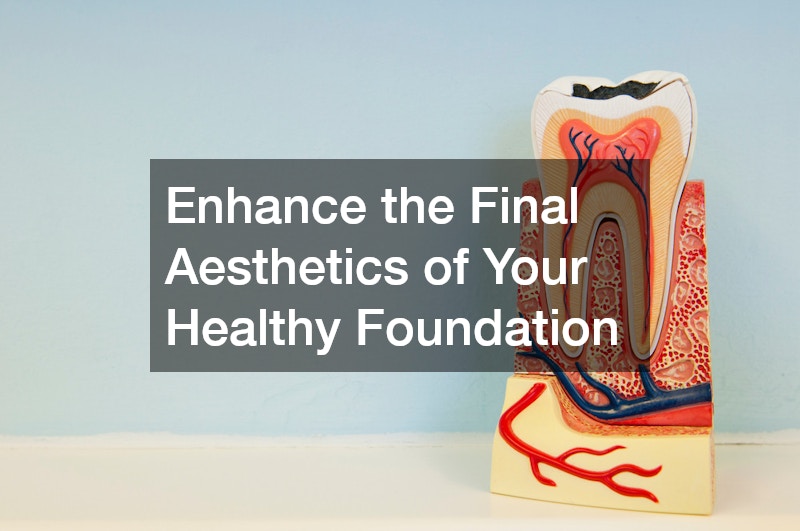
Enhance the Final Aesthetics of Your Healthy Foundation
Only after you have secured healthy gums, rebuilt missing structures, and aligned your bite should you turn your attention to the final aesthetic enhancements. Pursuing cosmetic work on a mouth that is functionally broken is like painting a car that has a blown engine; it might look good in a photograph, but it is ultimately doomed to fail. However, once the clinical heavy lifting is complete, enhancing the visual appeal of your smile can have a profound, life-changing impact on your self-confidence and your psychological well-being.
The most common entry point for aesthetic enhancement is professional whitening. While the aisles of pharmacies are flooded with over-the-counter whitening strips, abrasive charcoal toothpastes, and LED mouthpieces, these DIY solutions carry significant risks. Unregulated bleaching agents can cause severe, lingering nerve sensitivity, while highly abrasive whitening toothpastes actually scrub away your enamel, exposing the yellow dentin underneath and permanently darkening your teeth in the long run. Professional whitening utilizes highly concentrated, carefully monitored peroxide gels that safely penetrate the microscopic pores of the enamel to oxidize deep intrinsic stains without altering the physical structure of the tooth.
For patients seeking more dramatic transformations—such as altering the size, shape, or permanent color of their teeth—custom porcelain restorations are the gold standard.
The art of a complete smile makeover requires a practitioner to look beyond the teeth themselves and consider the entire architecture of the face:
- Facial Symmetry: The midline of the front teeth must perfectly align with the center of the nose and the philtrum of the upper lip.
- The Buccal Corridor: This refers to the dark spaces visible at the corners of the mouth when you smile. Widening the arch with restorations can fill these spaces, creating a broader, more youthful appearance.
- Gingival Architecture: The gum line must be symmetrical and proportionate to the length of the teeth. Sometimes a laser is used to gently recontour uneven gums before impressions are taken.
- Color and Translucency: Master ceramists do not create stark, opaque white teeth. They layer porcelain to mimic the natural translucency of human enamel, incorporating subtle gradient color changes from the gum line to the biting edge so the final result looks entirely natural.
Executing this level of customized, artistic restorative work requires immense skill and specialized training. When researching your options, do not just search for generic local dental services; you must specifically seek out a dedicated cosmetic dentist who has invested heavily in post-graduate aesthetic education. Demand to see a physical portfolio of their actual before-and-after cases—not stock photos provided by a marketing company. A true professional will be proud to show you their work and will work collaboratively with you to design a final aesthetic result that perfectly frames your healthy, newly restored foundation.
Conclusion
Taking control of your oral health is not a single event; it is a lifelong commitment to preserving the gateway to your body. The anxiety you feel about clinical procedures and the confusion surrounding treatment options are common barriers, but they do not have to dictate your future. By breaking down your care into a logical sequence of priorities, the entire process becomes manageable, predictable, and highly successful.
You now understand that the journey begins with establishing a pristine foundation through the eradication of gum disease. From there, you protect your jawbone and structural balance by replacing missing roots, and you preserve your enamel by ensuring your bite functions in perfect mechanical harmony. Only when this robust framework is built do you apply the final aesthetic touches that make your smile truly shine.
Modern medicine has advanced to the point where treatments are highly efficient, long-lasting, and virtually painless. There is absolutely no clinical reason to allow fear or uncertainty to keep you living with discomfort or hiding your smile from the world. The power to change your trajectory is entirely in your hands. Take that first, vital step today by reaching out to a qualified professional, scheduling a comprehensive baseline evaluation, and beginning the empowering journey toward a lifetime of total oral wellness.