
Tooth discoloration rarely happens overnight. It accumulates slowly, driven by daily choices that seem harmless in isolation — a morning coffee, an afternoon tea, a nightly glass of red wine. By the time most people notice the change, months or years of staining have already embedded themselves into the tooth enamel. Understanding which foods and habits are most responsible, and how staining actually works at a structural level, gives you a genuine advantage in slowing or preventing it.
How Staining Actually Happens
Tooth enamel looks smooth, but under magnification it’s covered in microscopic pores and ridges. Chromogens — the pigment compounds found in many foods and drinks — attach to this surface and, over time, work their way into the enamel itself. The process accelerates when acids are involved, because acidic substances temporarily soften enamel and open those pores wider, allowing pigments to penetrate more deeply before the surface rehardens.
Tannins complicate matters further. Found heavily in coffee, tea, and red wine, tannins are astringent compounds that bond chromogens to tooth surfaces, essentially acting as a fixative for stains. This is why these three beverages are responsible for the majority of dietary staining — it’s not just the color, it’s the chemical interaction between the tannins and the enamel surface.
The Biggest Dietary Culprits

Coffee and tea sit at the top of the list for frequency alone. Most adults consume at least one cup daily, which means the enamel is exposed to tannins and chromogens repeatedly over years. Black tea stains more aggressively than green or herbal varieties, though adding milk reduces — but doesn’t eliminate — the staining effect by partially binding the tannins before they reach your teeth.
Red wine combines tannins, chromogens, and acid in one glass, making it particularly effective at producing lasting discoloration. White wine is often overlooked, but its high acidity softens enamel and primes it for staining from foods eaten alongside it — a useful reminder that staining isn’t always from the most obvious source.
Deeply pigmented foods follow a predictable pattern: if it stains a white tablecloth, it will stain teeth. Berries, pomegranate juice, balsamic vinegar, tomato-based sauces, and curry spices all carry significant chromogen loads. The difference between occasional and habitual exposure matters enormously — someone eating blueberries a few times a week faces a different risk profile than someone drinking pomegranate juice every morning.
Acidic foods and drinks deserve separate attention because their staining mechanism is indirect. Sports drinks, citrus juices, and carbonated sodas don’t always carry heavy pigments, but they soften enamel consistently. Sipping acidic beverages slowly over an extended period — as many people do with iced coffee or juice — prolongs acid contact and maximizes enamel vulnerability.
Habits That Accelerate Staining
Smoking and tobacco use produce a category of staining that dietary changes alone cannot address. Tar and nicotine penetrate enamel deeply and create yellow-to-brown discoloration that resists ordinary brushing. The staining from tobacco is also cumulative in a way that differs from food: it deposits on the enamel surface and in the gum margins, and it worsens substantially with years of use rather than leveling off.
How and when you brush matters more than most people realize. Brushing immediately after consuming acidic foods or drinks — within 30 minutes — can actually worsen enamel erosion because the enamel is still softened and mechanically vulnerable. Waiting at least 30 minutes before brushing allows saliva to re-mineralize the surface. Rinsing with water immediately after eating or drinking, however, is genuinely helpful and carries no downside.
Dry mouth, whether caused by medication side effects, breathing through the mouth, or medical conditions, significantly increases staining risk. Saliva plays an active protective role — it neutralizes acids, washes away pigment particles, and contributes to enamel remineralization. When saliva flow is reduced, the natural buffering system that helps protect teeth operates at a fraction of its normal capacity.
Consider the difference between two habits: drinking coffee in one sitting versus sipping it continuously over two hours. The extended sipping model keeps enamel in a prolonged state of acid exposure and chromogen contact, dramatically increasing staining compared to a single 15-minute window of the same beverage volume.
Surface Stains Versus Intrinsic Discoloration
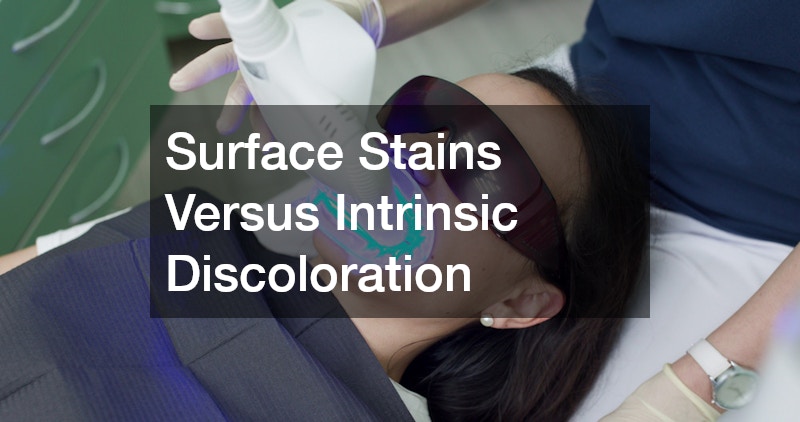
Not all discoloration originates from external sources, and conflating the two leads to poor decisions about how to address it. Surface stains, also called extrinsic stains, sit on or just within the outer enamel layer. These are caused by the foods, drinks, and tobacco habits described above, and they respond to professional cleaning and teeth whitening in ways that intrinsic stains do not.
Intrinsic discoloration originates inside the tooth structure itself. It can result from trauma, certain antibiotics taken during tooth development, excessive fluoride exposure during childhood, or natural aging as dentin darkens beneath thinning enamel. No amount of surface treatment will reverse intrinsic discoloration — it requires different cosmetic interventions, such as veneers or bonding.
Identifying which type you’re dealing with matters before pursuing any treatment. A dentist can distinguish between the two during a standard examination. Pursuing surface treatments for intrinsic staining is an expensive and frustrating dead end.
Practical Strategies That Actually Reduce Staining
Behavioral timing adjustments are underused. Drinking staining beverages through a straw reduces direct contact with front teeth — a meaningful difference for consistent consumers of iced coffee or dark juices. Rinsing with plain water within a few minutes of eating or drinking chromogen-heavy foods removes much of the surface pigment before it can bind.
- Switch from sipping coffee over 90 minutes to consuming it within 20-30 minutes, then rinse with water immediately after.
- Use a fluoride toothpaste with a mild abrasive — look for a Relative Dentin Abrasivity (RDA) score under 70 for daily use — which removes surface chromogens without eroding enamel.
- Schedule a professional cleaning every 6 months; polishing during these appointments removes accumulated extrinsic staining that brushing cannot reach.
Dairy products consumed alongside staining foods offer a modest protective benefit. The casein proteins in milk and cheese bind to tannins before they can attach to enamel. Finishing a meal that included red wine or berries with a small serving of cheese is a practical application, not a dental myth.
Reassessing Your Daily Routine
The cumulative nature of staining is the detail most people underestimate. No single cup of coffee causes visible discoloration, but 1,500 cups over five years — a modest estimate for a two-cup-a-day habit — tells a different story. The staining that frustrates people at age 40 was built almost invisibly through their 30s.
Meaningful change doesn’t require eliminating every staining food or drink. It requires reducing frequency, shortening contact time, supporting saliva flow, and staying current with professional cleanings. Small adjustments applied consistently produce far better long-term outcomes than dramatic short-term restrictions that don’t hold.