
Stepping into private practice as a newly licensed dentist is one of the most rewarding yet complex milestones of a clinical career. Transitioning from associate work or dental school into ownership requires a fundamental mindset shift from clinical practitioner to business operator. Beyond delivering exceptional clinical care, establishing a thriving practice demands meticulous planning around site selection, physical facility build-out, regulatory compliance, and patient acquisition. Successfully launching your initial location depends on creating an efficient, welcoming environment that instills patient confidence while supporting seamless clinical workflows.
Building a dental practice from the ground up involves coordinating specialized contractors, architectural designers, and medical equipment technicians across every phase of development. From pouring concrete foundations and securing a durable building envelope to designing sterile operatories and presenting a polished exterior, every infrastructure decision impacts long-term operational costs and patient perception. Prioritizing patient comfort, staff ergonomics, and strict medical facility standards from day one helps avoid costly future renovations. Taking a strategic, structured approach to facility development lays a solid foundation for sustainable practice growth and lifelong professional fulfillment.
Locating Ideal Real Estate for Ground-Up Construction

Selecting the right geographic location is the single most critical decision when launching a new dental practice, directly dictating patient foot traffic, visibility, and long-term demographic expansion. Evaluating prospective properties requires analyzing local population growth, household median incomes, nearby competitors, and commuter drive-by patterns. Understanding how to find land for development allows ambitious practitioners to acquire prime corner lots or retail-adjacent parcels with flexible zoning for medical facilities. Securing land that accommodates future building expansions, accessible driveways, and ample patient parking positions your startup for decades of uninterrupted operational growth.
Partnering with commercial real estate brokers and civil engineers ensures the parcel possesses adequate municipal utility connections, including heavy-capacity electrical services, clean water feeds, and modern sewer lines essential for clinical suction units. Soil testing, environmental impact reviews, and local setback ordinances must be thoroughly evaluated before closing on the property to prevent costly construction surprises. Choosing a high-visibility, easily accessible location eliminates marketing friction, making it simple for new families in the area to locate your office and establish care.
Installing Weather-Resistant Overhead Envelopes for Medical Facilities
A dental office contains hundreds of thousands of dollars in high-tech diagnostic equipment, 3D cone beam scanners, sensitive digital sensors, and vacuum pump systems that cannot tolerate moisture intrusion. A failing roof creates devastating operational disruptions, risking ruined technology, water-damaged ceilings, operatory downtime, and hazardous mold formation. Investing in premium commercial roofing during the initial build ensures the building envelope remains airtight, waterproof, and insulated against severe regional weather. Experienced medical facility contractors install durable single-ply TPO, EPDM, or standing-seam metal roofing systems designed to withstand heavy rainfall, snow loads, and intense UV exposure.
A properly engineered roof system also supports heavy commercial HVAC rooftop units (RTUs) required to circulate fresh air and regulate operatory climate conditions. Professional roofing crews fabricate custom curb flashing around mechanical duct penetrations, plumbing vent pipes, and electrical conduit lines to eliminate leak vulnerabilities. High-reflectivity roofing membranes reduce summer solar heat absorption, dramatically lowering monthly cooling bills and extending the lifespan of rooftop machinery. Protecting your physical practice with a resilient, code-compliant roof safeguards valuable clinical assets and guarantees uninterrupted patient appointments.
Selecting Visible Exterior Branding to Attract New Patients

Capturing community attention in a crowded medical marketplace requires distinctive, highly professional exterior signage that reinforces your brand identity. Prospective patients driving past your location should immediately recognize your practice name, modern branding, and clear dental messaging from the roadway. Partnering with an experienced commercial sign business ensures your facility features eye-catching monument signs, dimensional halo-lit channel letters, and high-contrast street displays that comply with municipal zoning bylaws. Clear, illuminated exterior signage establishes brand permanence, reassuring the public that your practice is modern, established, and welcoming.
In addition to roadside visibility, secondary exterior directional signs guide patients seamlessly toward reserved parking stalls, ADA-accessible ramps, and the main entrance foyer. Utilizing durable aluminum composites, weatherproof acrylics, and energy-efficient LED modules ensures your signage maintains vibrant illumination without demanding constant electrical maintenance. Distinctive branding builds subconscious familiarity among neighborhood residents, so when a dental emergency arises or a routine checkup is needed, your practice is the first name that comes to mind. Investing in polished exterior branding transforms your physical clinic into a recognizable local landmark.
Upgrading Exterior Paths With Durable Safety Guardrails
Patient safety begins well before an individual sits down in a treatment chair; it starts the moment they exit their vehicle and navigate your exterior walkways. Dental practices frequently treat elderly patients, young children, and individuals recovering from oral sedation who require stable, secure footing on entry ramps and stair landings. Contracting specialists for commercial railing installations ensures that all exterior ramps, elevated entry stoops, and retention walls feature code-compliant handrails built to withstand heavy daily use. Sturdy railings constructed from powder-coated steel, marine-grade aluminum, or brushed stainless steel provide essential physical support while complementing modern architectural finishes.
Adhering strictly to Americans with Disabilities Act (ADA) guidelines regarding handrail heights, continuous grab surface diameters, and ramp slope extensions protects your business from costly accessibility liability lawsuits. Professional metal fabricators anchor railing posts deep into cured concrete footings using heavy structural fasteners that eliminate wobbling or post degradation over time. Upgrading your exterior paths with clean, architectural guardrails prevents dangerous slips and falls while communicating to patients that their safety, accessibility, and comfort are valued at every touchpoint.
Keeping Patient Lots Clean and Debris-Free
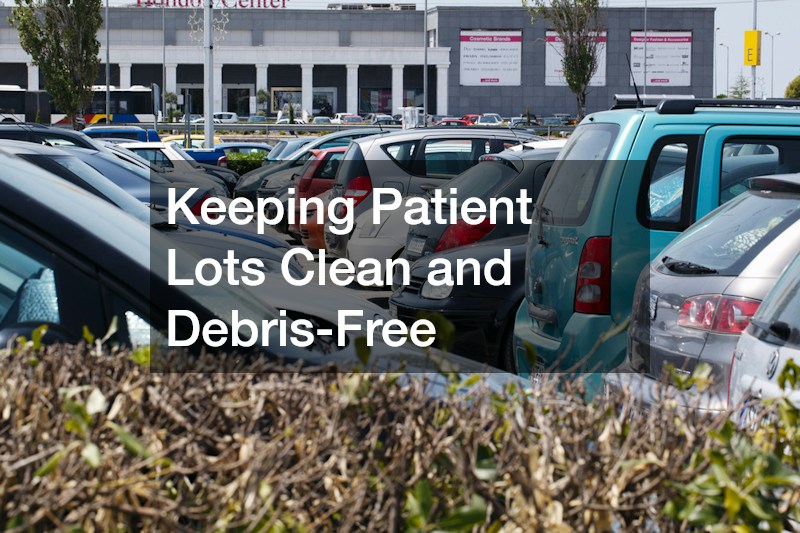
The condition of your parking lot and approach driveways creates the first tactile impression of your clinic’s cleanliness and professionalism. Litter, windblown debris, broken glass, and loose gravel scattered across parking stalls signal deferred maintenance, undermining patient confidence in your sterile clinical environment. Contracting a dependable local parking lot sweeping service ensures your property is routinely swept, cleared of refuse, and maintained at the highest standard of exterior hygiene. Scheduled overnight or early-morning sweeping sweeps away vehicle oil grit, leaves, and seasonal grit without disrupting daily patient appointments.
Routine sweeping also preserves your substantial investment in asphalt and concrete pavement by preventing abrasive grit from grinding down protective surface sealants under car tires. Clearing away loose debris prevents foreign objects from clogging storm drains and retention basins, stopping localized water pooling during heavy rainfall. Presenting patients with a clean, well-marked parking area establishes a tranquil, orderly greeting that eases dental anxiety before they even step through the front door. Maintaining a clean exterior reinforces your clinical commitment to sterile excellence and elevates your practice’s standing in the community.
Applying Professional Wall Finishes Across Operatories and Waiting Rooms
Clinical environments demand durable, hygienic interior wall coverings that withstand harsh chemical disinfectants without peeling, staining, or fading. In treatment operatories, aerosol spray from high-speed handpieces, ultrasonic scalers, and sanitizing solutions constantly contacts nearby wall surfaces. Standard residential paints break down quickly under medical-grade surface wipes, leaving chalky residues and discoloration. Engaging specialists in commercial interior painting ensures your walls receive scrubbable, low-VOC epoxy or antimicrobial acrylic finishes engineered specifically for clinical settings. Expert painters apply seamless, stain-resistant coatings that create a sterile barrier while maintaining an inviting aesthetic throughout patient corridors and operatories.
In the reception lounge, wall color sets the emotional tone for anxious patients waiting for appointments. Soft, neutral tones paired with warm earth-toned accents help lower patient heart rates and ease dental phobias far more effectively than clinical white walls. Professional painting teams deliver clean lines around door frames, baseboards, and ceiling soffits, ensuring an even, streak-free sheen that holds up against scuffs from chairs and heavy foot traffic. Upgrading your practice with premium interior paint formulations protects your drywall investments, simplifies daily operatory sanitation, and projects an image of modern clinical excellence.
Incorporating Modern Partitions for Patient Privacy and Light
Balancing natural daylight distribution with strict patient privacy standards is a central challenge in dental architecture. While open-bay operatory designs foster efficient staff movement and lower construction framing costs, patients expect visual discretion and acoustic privacy during examinations, consultations, and surgical procedures. Integrating architectural custom glass dividers between treatment suites provides the ideal solution, partitioning operatory bays without blocking ambient sunlight from reaching interior corridors. Frosted, reeded, or textured glass panels maintain clear sight barriers while preserving an open, airy feeling across the clinical floor.
Glass partitions also enhance hygiene protocols by offering smooth, non-porous surfaces that wipe down easily between patient visits. In the administrative suite, acoustic-rated glass entryways and checkout barriers keep sensitive financial and medical conversations confidential, supporting Health Insurance Portability and Accountability Act (HIPAA) compliance. Tempered and laminated safety glass panels withstand daily contact from rolling delivery carts, operator stools, and clinical equipment without scratching or shattering. Incorporating tailored architectural glass elements creates a sophisticated, light-filled practice that emphasizes both transparency and patient confidentiality.
Regulating Operatory Sunlight and Glare With Protective Film
Floor-to-ceiling windows flood a dental office with natural daylight, but unmanaged solar exposure introduces severe functional hurdles in treatment bays. Direct sunlight creates blinding glare on overhead LED operatory lights, washes out intraoral x-ray diagnostic monitors, and shines uncomfortably into reclined patients’ eyes. Additionally, solar heat gain forces commercial HVAC systems to work harder, leading to uneven temperature zones between perimeter operatories and interior supply rooms. Installing specialized window tinting across exterior windows mitigates solar heat gain, cuts harsh glare, and filters out damaging ultraviolet rays without darkening the room.
Regulating solar exposure also protects expensive dental chairs, delivery unit plastics, and waiting room upholstery from premature cracking, yellowing, and UV fading. High-performance ceramic or dual-reflective window films block intense heat rays while allowing natural, color-balanced light into treatment suites, ensuring accurate shade matching for crowns and veneers. Tinting also provides one-way daytime privacy, preventing pedestrians and neighboring businesses from peering into operatories during procedures. Managing window illumination elevates patient comfort in the dental chair while reducing monthly utility overhead.
Relocating Fragile Dental Operatory Equipment and Practice Assets
Whether transitioning an existing practice into a brand-new facility or taking delivery of secondary assets from an acquired office, moving sensitive dental technology involves immense operational risk. Digital panoramic x-ray units, autoclaves, air compressors, milling machines, and mechanical operatory chairs contain delicate electronics and calibrated hydraulics that cannot withstand rough handling. Contracting professional office movers with experience in medical asset relocation guarantees that equipment is disconnected properly, securely crated with custom shock-absorbing materials, and transported without structural damage.
Specialized commercial movers coordinate logistics to minimize clinic downtime, ensuring that relocation occurs over weekends or scheduled closures so you never miss an active production day. Teams utilize specialized floor protection, heavy-duty stair climbers, and air-ride suspension trucks to move heavy sterilization equipment and delicate computer servers safely. Once at the new location, movers stage machinery precisely according to architectural plumbing and electrical rough-in plans, accelerating the work of medical equipment service technicians. Entrusting your relocation to seasoned commercial movers safeguards multi-thousand-dollar clinical equipment and accelerates your timeline toward reopening day.
Marketing Popular Cosmetic Treatments to Boost Early Cash Flow
A brand-new dental practice faces significant initial overhead, making early revenue diversification essential for covering debt service and payroll. While restorative treatment plans and crown preparations often require multiple appointments and lab processing times, elective aesthetic services offer immediate cash-based income that does not rely entirely on third-party insurance reimbursements. Highlighting in-office and take-home teeth whitening during hygiene recare exams attracts patients seeking quick, visible smile enhancements for upcoming life events. Offering professional whitening packages establishes immediate patient satisfaction, generating word-of-mouth referrals and positive online reviews.
Integrating cosmetic whitening options into new-patient onboarding packages is an effective strategy for filling early schedule openings. Patients who invest in cosmetic brightening are more likely to seek comprehensive aesthetic care later, including composite bonding, clear aligner therapy, and porcelain veneers. Educating patients on the safety and efficacy of professional prescription-grade whitening versus over-the-counter strips positions your practice as a trusted authority on smile aesthetics. Prioritizing accessible cosmetic treatments builds early practice revenue and turns first-time patients into loyal brand advocates.
Building your first dental practice is a comprehensive undertaking that demands equal parts clinical skill, business acumen, and facility management. From securing prime development land and constructing a durable commercial roof to executing sterile interior finishes and curating high-demand cosmetic services, every phase plays a pivotal role in your practice’s success. By prioritizing patient comfort, regulatory compliance, and functional workflow design from day one, you establish an operational foundation that supports clinical efficiency and patient retention.
Achieving a seamless launch relies on partnering with specialized contractors and trade professionals who understand the technical demands of medical and dental facilities. Collaborating with experienced builders, painters, and equipment movers protects your clinical technology, ensures building code compliance, and minimizes costly delays. Committing to thoughtful infrastructure choices and patient-centered design transforms your vision into a thriving, modern practice that serves your community and advances your professional career for decades to come.